Showing posts with label Developmentally Appropriate. Show all posts

Fall and Halloween Thematic Fun for Kindergarten and Preschool

Looking for some Fall Themed Fun? Check out these great thematic learning products for early learners that are filled with developmentally appropriate academic based learning. Click on each product for full description. And Two of the products are FREE!


Strategically Teaching Alphabet Letters Through Alphabet Immersion

Immersing your students in the alphabet is a great way to work on letter or sound recognition. Engage your students with alphabet songs, chants, and books. Play alphabet games and review letters with flashcards every day. Trace and write letters of the alphabet every week.  Form letters with commercial or homemade handwriting sticks and use other manipulatives for hands-on practice with letters. Address the alphabet in a variety of ways to keep students interested and involved.

If you’re looking for a high-interest manipulative for hands-on alphabet practice, check out Alpha-Bots (available at Lakeshore). 


These alphabet transformers are popular with girls and boys of all ages.  Try using them in the following ways:
  1. Have students choose a letter to name or write, and then transform. 
  2. Place them around the room for an Alphabet Hunt - when the student finds a letter, he/she writes the letter, then transforms it into a robot. The next student can transform it back into a letter, and then write that letter. 
  3. Let one student quietly transform the Alpha-Bots while waiting to be the next student that you assess.
Continue the list with ideas of your own.  Alpha-Bots are versatile and can be used independently or with a volunteer helper. 

Learning the alphabet helps develop a foundation for reading. The key to success is surrounding your students with the alphabet using a variety of approaches. For more ideas and supporting materials, check out the following products:


Fall - Autumn Thematic Units For Early Learners

Fall is in the air, and it is time for some Developmentally Appropriate, Thematic Teaching!

All units are filled with Cross-curriculur activities in varying formats. Everything is there, ready for you: Reading, math, art, music, science, writing, and guided reading! All units are economically priced at $7.00


Inappropriate Worksheets Are Making Me Crazy!

Now, it is no secret that my forum is one of developmentally appropriate practices, so it should come as no surprise that the worksheets I “must do” with my kiddos make me crazy. Why?

Young children learn best through real experiences, through concrete activities with manipulative materials. The abstractness and one-brained method of worksheets prohibit me from differentiating instructions for students in my class, who range from a working level of 18 months to that of a 6 year-old. Watching the thirteen “below benchmark” students in my classroom simply scribble on the sheet is frustrating at best. But the curriculum has a fix for that....another worksheet.

Worksheets are the easy way out. A concept should be taught with multi-levels of experimentation, direction, and differentiation. This takes time. Lots and lots of time. A worksheet simply takes a walk to the copy machine or a simple "rip" from a workbook.

To the other side of the coin, worksheets do not promote nor encourage higher level thinking skills, discovery, experimentation or out of the box thinking. As worksheets generally have one-way of doing, the most the high kids can do is color the worksheet to expand their learning.

Worksheets teach a program, not a child. Seriously? Do “Big Box Curriculum Companies” really think all 21 of my students are at the same place in the learning continuum? Well, if they do, I wish they could have experienced D’s tears today as they poured upon his worksheet.

Worksheets typically have only one right answer. If the concept is taught in a play-based environment, the students are able to take risks and to experiment, and learn from experiencing. 

Now, I will admit that an occasional worksheet is beneficial. There are many pages that ask student’s to manipulate, cut, organize, practice handwriting, or make comparisons. Worksheets such as these, purposeful worksheets, if you will, can be used in moderation. 

So as I go back tomorrow and pass out that next math worksheet, I will try not to look D. in the eyes, and quietly promise myself that I will teach him using appropriate methods “how to do the concept” at Learning Center time.

Animal Zoo: Early Reading Games

If you love teaching letters and sounds using lovable animal characters, you will enjoy this product: Animal Zoo: Early Reading Games.

Contents Include:

Animal Alphabet Flashcards
Alphabet Zoo Match-up: Matching Animal to Beginning Letter
Alphabet Zoo Beginning Sounds
Zookeepers: Letter Recognition
Write the Room: Alphabet Zoo
Alphabet Zoo Bingo


Back to School Excitement

This weekend I was able to spend some time with my favorite tots. The 6 year old is so excited for a new beginning in 1st grade. He has great hope for a teacher that will love him, nurture him and care for him. He showed me his new backpack at least 10 times.

The kids who enter our classrooms are precious souls, and it is our job to love them. Here is my yearly motto. It serves me well.

Setting Up the Classroom

As educators are setting up their classrooms for a brand new school year, may educating the Whole Child be foremost in their thoughts. The areas for discovery are the most important areas in our classrooms!

Teacher Please Love My Child


Last year my grandson T. had a kindergarten experience that made me sad indeed.

Instead of waking up each morning with joy for learning, he cried and complained he didn't want to go. He would return home from school with his shirt completely chewed up from nervousness and anxiety. When we teach in ways that are developmentally inappropriate, we take the excitement out of their adventure, we remove the joy that learning should be. Hopefully this year will be much better for him, and for all children everywhere!

*Be sure to check out our new site at kindergartenkiosk.com


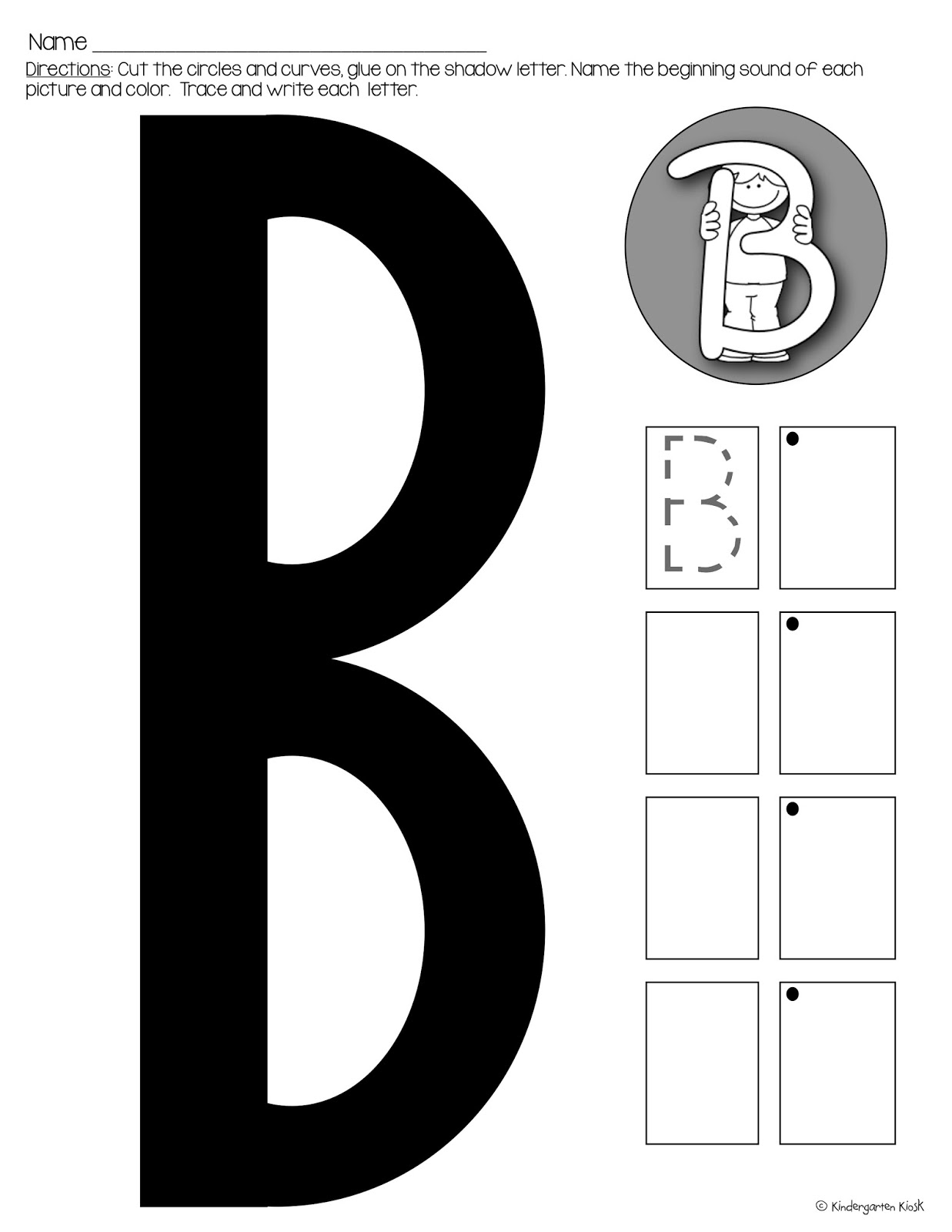
Sticks and Curves: Uppercase Handwriting Worksheets


If you love Handwriting Without Tears, or just looking for a quality product for early learners, you will love this Uppercase Letter Formation product! There are two versions. The one page version included in the preview, and a 2 page version that may be easier for little hands to manipulate.

Developmentally appropriate practices are especially important when it comes to the teaching of letter formation. These worksheets will fill that bill. Each worksheet is interactive and is completed in five steps.
1. Student cuts along dotted line.
2. Student cuts out sticks and curves.
3. Student glues the white pieces on the black letter.
4. Student traces and then writes the letter practicing the stick and curves.

5. To complete the page, the student can color the pictures that begins with the letter sound.


As with all of our products! Classroom tested and Developmentally Appropriate for Early Learners.


Students cut the two curves and 1 stick apart

 
Student Paste Pieces on Letter and Trace/Write

Play is a Training Ground for Creative Thinkers

When I was a young girl I was raised on a dairy farm in the “Hired Hand” house. Consequently, we did not have a lot of money, and I certainly didn't have many toys, but there was one thing I had a lot of and that was opportunities for discovery, play and access to the “Bookmobile.”


I remember every Monday at 4 p.m. I would head for the Bookmobile that was located about a mile away. Generally I would ride my bicycle down that bumpy, gravel lane as fast as my legs could carry me.  I was so excited to get my next volume of Nancy Drew, Little House on the Prairie, or any of the other special treats the librarian had tucked away for me. 

I would return home, read, and read, and then dramatize the book. Yep, I acted out the entire book using anything from dolls to pencils, or just my imagination.  From this reading and acting ritual that I developed at a young age, I did not realize that I was doing all of the activities necessary to become a fluent, comprehender of text. In fact, I learned about the world without one worksheet or test to tell someone what I had learned in a passive manner. 

Thank goodness that my life’s path has been that of a squiggly line. I am grateful for the opportunity to grow up on that dairy farm where I could be a rodeo queen one day, and a detective solving crimes the next. Thank goodness my mom couldn't afford the summer skills workbooks of today. 


Kindergarten Homework: No Prep and Developmentally Appropriate!

Are you looking for a Developmentally Appropriate Option to Kindergarten Homework?


Extend the learning at home by sending home monthly homework packets that are strategically linked to the Common Core Standards. Your students and parents alike will love the easy to use formats, engaging activities, and ease of homework management.


This packet includes contains all 16 Packets in our 
Kindergarten Series. And ALL 16 packets have two versions, English and Spanish Translation.


January Homework Contents

Table of Contents:
The Snowman A guided reading book
Snowy Lotto An alphabet game
Winter Delivery A sight word activity
Color Match Snowmen A color word activity
A Winter Wonderland A blending game
Snowflake Swirl A Counting activity
Snowman Clock A math activity
January Calendar A number handwriting activity

February Homework Contents
Table of Contents:
Little Valentines A guided reading book
Heart Bingo & Flash Hearts Sight word activities
Don’t Break My Heart A word segmenting game
My Valentines Using valentines to extend learning
Dragon Dance Alphabet Sound Fluency
Number Games Math Activities
February Calendar A number handwriting activity

March Homework Contents
Table of Contents:
Out in Space A guided reading book
Mr. Spaceman Conventions of Print
Letter Blast Off Alphabet Letter Sound Naming Automaticity
Race Through Space Alphabet Letter Naming Automaticity
Skip Counting Counting by 2’s, 5’s, and 10’s
Alien Planet Segment Words into Individual Phonemes
Decode it-Defeat it Reading CVC Words
Alien Snap Counting From any Given Number

April Homework Contents
Table of Contents:
The Pond A guided reading book
Slithering Snakes Alphabet sound fluency
Frogger A decoding game
Turtle Lotto A sight word game
Family of Ducks Word families
April Calendar A number handwriting activity
Frog Eggs Composing numbers
Easter Egg Delivers Plus and minus

May Homework Contents
Table of Contents
The Jungle A decodable, sightword reader
Roar! A decoding game
Safari Sights A sight word game
The Jungle A writing activity
Around the Zoo A comprehension activity
At the Zoo An addition game
Gorillas in Cages A subtraction game

June Homework Contents
Table of Contents
Capture the Butterfly A word family game
Mosquito Slap A sightword game
Flower Garden A sentence game
I Can be a Scientist A sightword reader
Lilypad Leap A number line game
Ladybug Addition An addition activity
Dragonfly Subtraction A subtraction activity
Across the Curriculum A collection of fun learning activities

July Homework Contents
Table of Contents
The Beach A sightword reader
Sand Castles A sightword game
Summer Celebrations A sentence game
Diving for Letters Alphabet recognition game
Shell Addition An addition game
Beach Ball Subtraction A subtraction activity
The Number Swim Writing Numbers


August Homework Contents
Table of Contents
Rhyme Book A book of rhymes
My ABC’s An ABC activity
Ride to the Park A color recognition game
The Shape of Things A shape recognition game
Number Flashcards A number recognition activity
Name Writing A handwriting activity
All about ME A classroom community building activity

September Homework Contents
Table of Contents
The Game Sightword reader
Football Flashcards A capital letter review
Kick off ABC Game An alphabet game
Name Cheer A letter recognition activity
Football Rhymes A rhyming game
The Team A number game
Huddle Up A number activity

October Homework Contents
Table of Contents
Haunted House A syllable game
Boo to You An alphabet game
Spider Race An alphabet activity
Monster Cookies Beginning sound activity
Dark Woods Math A number game
No Tricks, Just Treats A sort and graph activity

November Homework Contents
Table of Contents
My Bear A sightword reader
Time to Hibernate An alphabet game
Star Gazing A letter sound game
A Walk in the Woods An ending sounds game
Letter Trace A handwriting activity
Bear Math Various math activities
Number Bears A flashcard activity

December Homework Contents
Table of Contents
Christmas Time A sightword reader
Christmas Tree ABC An alphabet game
To the North Pole A rhyming game
Christmas Sounds A phonemic isolation game
Sound Train Alphabet Sound Fluency
Christmas Memory A number game
Letter Cookies A handwriting activity

Fall Intervention Homework Contents (Spanish Version also included)
Table of Contents
I like Books A guided reader
Alphabet Flashcards An alphabet activity
Capital Shake An alphabet game
My Letters A letter fluency activity
Beginning Sound Isolation Beginning sound game
A-Z Handwriting Handwriting
Number Practice A math activity

Winter Intervention Homework Contents (Spanish Version also included)
Table of Contents
Planes An alphabet sound game
Letter/Sound Fluency Practice sheets
Matching Middles A phonemic awareness activity
Find the Picture A blending and segmenting game
Handwriting Handwriting Practice
Sight Word Study A sight word activity
Color the Shape A math activity
Bingo 0-20 number recognition.

Spring Intervention Homework Contents 
Table of Contents
The Early Bird An Alphabet Fluency Game
The Hungry Lamb Sound Fluency
Rain Go Away A decoding game
Flower Garden A sightword activity
Bunny Hop A segmenting game
Word Riddles Phonemic awareness
Number Hunt Number recognition
Baby Lambs Addition

August Homework Packet: Developmentally Appropriate For Early Learners

Because most kids are excited for the thoughts of new homework, welcome your new and eager learners with a "Developmentally Appropriate" Homework packet right away. This NO-PREP packet can be passed out at registration, orientation, back to school night, or even on the first day of school. The simple games and activities are fun, engaging and linked to standards. The packet is fun and easy for parents and child to complete together with nothing to return but a signed check off sheet.

These packets make homework a breeze! I copy the entire years worth of packets at the beginning of the year and place each in a ziplock baggie. I store these in a large plastic bin in my garage (keeping all months together). Then, when the new month nears, I simply go to the bin, grab the next month's worth of packets and take them to school. Some years I have simply sent these packets home in the baggies. For the last several years, I have used plastic homework folders. So, I simply take the returned folder, take out the last month's completed homework sheet, record it, put in the new month's homework, and then reuse the baggies.

As a bonus, all of the kindergarten-level packets come with a version with Spanish instructions. 


We offer all three levels for each of the 12 Months of a year. Additionally, we offer 3 Kindergarten RTI/Intervention packets for Fall/Winter and Spring with both English and Spanish instruction.


Developmentally Appropriate - Child Centered Homework Packets: July

Tired of Worksheets? Are you looking for some great homework that is Developmentally Appropriate and Child Centered? You will love this NO-PREP option. These July packets will allow students to revisit important skills that should be mastered in order to be successful in the upcoming grade in school. This product is great from summer homework sent by teachers, parents looking to enrich learning in the summer, or homeschool parents that maintain a year round schedule.


Click on the links below to find these products at a low-price of $4.00 each on Teachers Pay Teachers.
 

Kindergarten: Let's Remember It's Purpose

Friedrich Wilhelm recognized that 5 year olds had unique needs and capabilities as he formed the first kindergarten. May Kindergarten Teachers across the nation hold strong to his concepts that kindergarten, through play and activity will serve as a social experience for children as they transition from home to school.  His goal: that children should be nourished in "children's gardens." 

Each child in our care deserves this nurturing devotion at his/her own developmental pace. My goal:

Every Child
Every Day
Every Way
Experiencing Success.


What Should Young Children Be Learning?

Dr. Lilian Katz has certainly shaped me as an educator. I think I have read and studied everything she has written, and  I could listen to her words of wisdom all day long.  Following are but two bits of wisdom she imparts...

“If you do not build a foundation properly, it can be dangerous and very expensive to repair.”

“We must resist the temptation to start our students on the 3rd floor.” 

This video is lengthy, but well worth the time for all educators and parents of young children! Dr. Katz uses the analogy of structural engineering and foundational education.


The Development of a Child's Brain


A longer childhood equals a smarter brain, take the African Honey Badger, they live 14-18 months with their mother, an unusually long time. In fact, Honey Badger juveniles are usually still with their mother, learning from her, when they have reached or surpassed her in size. This is so unusual that when they were first observed, it was assumed that Honey Badgers hunted in mating pairs. The result of this long childhood is an amazingly smart animal. Just how smart are they? Well, just watch:


The long childhood of the Honey Badger is nothing compared to the long childhood of Human Beings. Childhood is a gift that has been provided for the development of our brains. Playing, pretending, building, and all of the activities of childhood are necessary for the development and growth of the brain. These things are the work of childhood.


Most children are going to have a great childhood, but what about the children who will not have that chance? What about the child who has delayed speech? What about the child who has been exposed to too much technology at too young of an age? What about the child who doesn't have adequate nutrition? What about the child who doesn't get enough sleep? All children can benefit from a classroom that supports their social and emotional growth, but for these children, it is essential. 

Now, to address the elephant in the room: the Common Core. There is a movement that is very against the Common Core. I am not against the Common Core, I do not believe that expecting academic rigor is the problem, but, I know where this movement is coming from. In the same vein, I am against Charter Schools (because the system is deeply corrupt) but when a parent wants to take their child out of public school and place him/her in a charter school, I absolutely know where they are coming from. 

You are worried about the emotional health of your child, aren't you? I am too.

Kindergarten can be a place of academics, but that should not and should never be it's main concern. I recently saw a post by a fellow Kindergarten teacher that read something like this, "I have a child who constantly needs praise. It's interrupting my teaching! What do I do?" Do you see the problem in this statement? A child who needs to be taught intrinsic motivation, a child who has an emotional need, is interrupting the teaching. If we are truly doing the job of early educators, teaching a child emotional and social skills should always be the primary goal of our teaching it should never be secondary to academic goals and it should definitely never be thought of as an intrusion to them.

The most encouraging thing about a child's brain development is that it is not set in stone. Neurological development is capable of fixing past deficiencies and of forming new pathways at any time, if given the right experiences. There are children who desperately need us to give them those experiences, but if we are not consciously focusing on their needs, if we are only focused on the things that can be measured (by those who make money off of measuring), then we will never give those children the experiences that their brains really need. 


Because the truth of the matter is, that every child is born with the same exact brain capability as Albert Einstein, Ada Lovelace, Steven Hawking, or Emilie du Chatelet. The only thing that sets us apart is the experiences each of our brains is fed. So if we are really concerned about the academic growth of our children, we shouldn't be concerning ourselves so much with what level a child can read at, or how far he can count. What we really need to concern ourselves with is this question:

How rich are their experiences?


Printfriendly