Add a Buzz to Games


If you’re looking for something to motivate your students, try using answer buzzers. This Learning Resources product  is available at Learning Resources, Calloway House, Amazon, and many other places. It adds fun and excitement to almost any game, lesson, or skill review. 

Students can hit a buzzer to answer a question or identify a sight word. They can also buzz in when completing a fluency exercise. However you choose to use them, answer buzzers will help keep your students engaged in learning! 

Teacher Appreciation Sale!

It's time for a Teacher Appreciation Sale!

Fill your carts with great teaching materials and don't forget to use the promo code TAD13 when you check out!

Jungle and Zoo in Kindergarten


My classroom is slowly transforming into a Jungle Delight! My playhouse is the Jungle, my science center is the zoo, and my reading and writing centers are a celebration of jungle/zoo animals.

We are having a lot of fun as we stray true to the tenants of the Common Core Standards by using two of our great units. Check them out at our online stores!


Earth Day Thematic Unit

Celebrate Earth Day, Arbor Day, or any day when it comes to saving our planet and celebrating Earth! A common core thematic unit!


Cinco de Mayo Thematic Unit

Viva la Mexico!


Celebrate Cinco de Mayo in a grade way by using this great 136 page thematic unit that is strategically linked to the Common Core Standards.


Contents Include:


Scripted Literacy Lessons:
Cinco de Mayo: Attending to Key Detail in Text
The Sombrero Circle: Identifying High Frequency Words
Fiesta: Decoding Words With Blends, Digraphs, Silent E
Mexican Hat Dance: Fluently Reading Sight Word and CVC Sentences

Independent Activities: 
Fill The Piñata: Segmenting Words                                                         
de Colores: Using Spanish Color Words                                                 
 Mi Amigos: Writing CVC Words
Scripted Math Lessons With Independent Options:
Number Match: Matching Number to Quantity With Spanish Words
Party of Ten: Making Combinations of Ten
Jumping Beans: Finding Answers to Equations

Independent Activities: 
Maraca Equations : Writing Equations
Cinco de Mayo Math: Adding and Subtracting                                                   
Math Journal: Ten Amigos in All

Writing
Mexico Word Wall
Writing Prompts: Mexico

Guided Reading Books
Cinco de Mayo

Science
Mexican Jumping Beans

Dramatic Play
Fiesta Supply Store

Kitchen
dulce de leche

Art Projects
Tissue Paper Flowers
Flowing Head Dress
Mexican Vest
Mexican Hat
Paper Bag Maraca

Do you want this unit for free? Click on the sidebar link to The Teacher's Notebook event.

Castles & Fairy Tale: Common Core Thematic Unit


This great unit is available at both of our online stores!

Strategically teach the common core standards and have a lot of fun as well using this 122 page thematic unit. 


Contents include:

Shared Reading Activities:
Retelling a Story: Sequencing a Familiar Story
Once Upon a Time: Identifying Story Elements

Scripted Literacy Lessons:
My Kingdom: Distinguishing Between Similarly Spelled Words.
Kiss a Frog: Sight Words
Race to the Rose: Decoding Words
Spinning Gold: Counting Syllables

Independent Activities: 
Story Boxes: Retelling Familiar Stories
Digraph Pairs: Identifying Digraphs
Grandma’s House: Writing Simple Words

Scripted Math Lessons With Independent Options:
Knight School: Making Sums of 10
Climb the Beanstalk: Identifying Missing Numbers
Cinderella’s Shoes: Adding Fluently

Independent Activities: 
Follow the Yellow Brick Road: Comparing and Writing Numbers
Dance All Night: Telling Time
Rapunzel’s Tower: Comparing Measurements

Writing
Fairy Tale Word Wall
Writing Prompts: Fairy Tales, Dragons
Writing Center Activities: 
How To, Label It, Make a List


Guided Reading Books
Jack & The Beanstalk

Science

Magic Bean Seeds

Art Projects

Draw a Castle
Castle Construction
Frog Prince Construct
King or Queen Construct


Songs/Fingerplays

Poof! I’m a Giant
Cinderella


Kathleen and her students have  been getting a little bit of rain in Idaho, so it seemed like a perfect time to make a rainy day picture. Using two half-sheets of paper, students made kids carrying umbrellas. We started with triangle coats and rectangle arms. Students then designed their own umbrellas and handles. After adding boots, the kids painted raindrops - we used liquid waterpaint and long q-tips for the brushes.


This is a fun project whether the weather is rainy or not! For detailed directions and a portfolio page, check out our Spring unit.

Color Mixing


Mixing colors is a great way to use science process skills. With just a little bit of food coloring and water, students can observe, experiment, draw conclusions, and record their findings. 

Mix the primary colors in jars, then pour a small amount of each in separate frosting or butter tubs. Provide test tubes (Oriental Trading) or clear plastic containers and eye droppers for color mixing. Students will repeat the experiment again and again and again!

For detailed instructions and a scripted lesson, check out our Spring unit (It’s a Spring Thing).

Space, the Final Frontier


If you want to capture the attention of your students, just introduce the theme of space! Kindergarten kids love the mystery and excitement of space and space exploration. As an added bonus, they are willing to work on almost any skill if you give it a space twist. In the past two weeks, Kathleen's class have practiced literacy skills such as blending, segmenting, decoding, naming sight words, reading simple books, and writing. In math they have counted by tens, practiced addition, and solved word problems. 


In addition to literacy and math skills, they developed science vocabulary and learned facts about our universe. Through a solar system construct project, the students worked cooperatively to create the sun and planets. Later they followed directions to design astronauts. 

Through a unit on space, you can meet the needs of all of your students. You can tailor your activities to support struggling students, help on-level students move up another step, and challenge high students. For ideas and lessons, check out our unit, Out In Space.


And add some alien variety by joining this unit with our Alien unit!


Clocks in Kindergarten


Telling time is not one of the Common Core Standards for kindergarten, however, there is still merit in introducing clocks. Through a clock unit, you can:
reinforce number recognition and the count sequence.
challenge students.
help students develop a lifeskill.
prepare students to meet a first grade Common Core standard.

We have a clock unit combined with our New Year’s unit, but you can introduce clocks at almost any time during the year. Kindergarten students enjoy working with large and small manipulative clocks. Most kids can easily tell time to the hour with either analog or digital times after just a few time-telling lessons. If clocks aren’t already a part of your curriculum, give them a try.Teach a few lessons, add them to your opening activities, and have a little time-telling fun!


Transportation Unit

You will love this all inclusive unit on transportation, a favorite of all children! Contents are systematically linked to common core objectives and are clearly stated.


                    Contents include:

Songs/Fingerplays

My Car
Down By The Station
Engine Engine Number Nine


Art Projects

Paint a Plane
Shape Train: Using Shapes to Create a Larger Shape
Construct Vehicles: Developing Spacial Reasoning
Vehicle Wheel Paintings:Using Nontraditional Tools
Transportation Mural: Cooperative Art
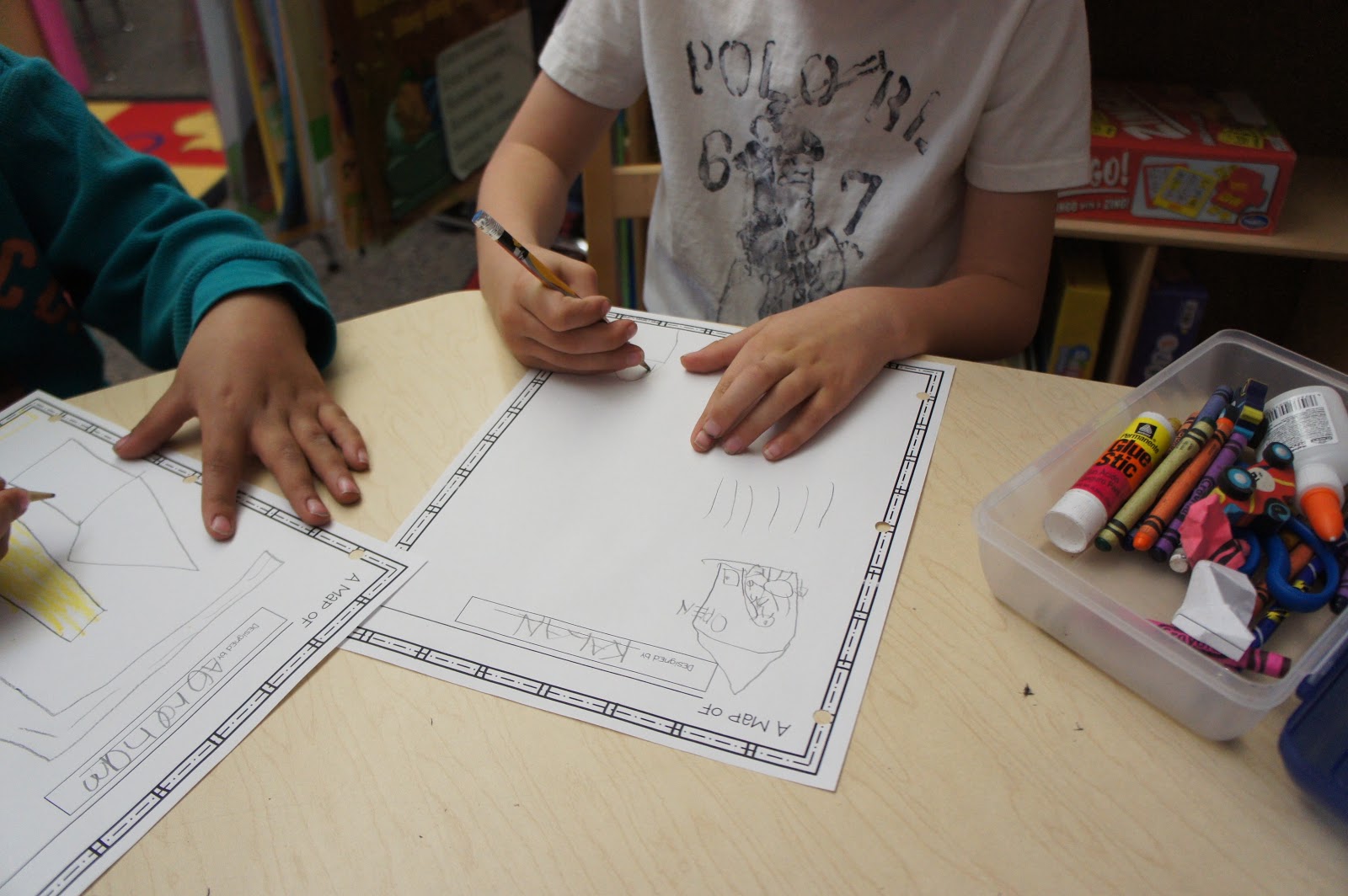
Make a Map: Use the Mural to Make Maps


Science

Ramp It Up: Exploring Properties of Physics
Paper Airplanes


Guided Reading Books
Take a Ride

Class-Made Books
My Vehicle


Writing

Transportation Word Wall
Writing Prompts: Take a Ride, To Town
Writing Center Activities:
How To (Level 1 & 2) , Label It, Make a List


Scripted Math Lessons With Independent Options:
Derby Race Car: Identifying Numerals 0-100                            
One Up Tune Up: Adding One to Make a Sum                
Transportation Graph: Graphing                                                                                
Parking Lot Subtraction: Subtraction    
Independent Activities:
Parking Cars:  Connecting Numbers to Quantity
On The Plane: Solving Addition Problems 0-5                                                  
Counting Cars: Observing and Recording Data


Scripted Literacy Lessons:
Road Racer: Reading Sight Words
Flying High: Reading and Sorting Real and Pretend Words
Vacation Destination: Alphabet Letter and Sound Fluency
Breakdown: Using Letter Sounds to Read Words

Independent Activities:
Road Trip: Writing Upper and Lowercase Alphabet Letters
 Planes Trains and Everything Else: Rhyming Words
The Missing Letters: Writing Letters and Sounds

The following are some shots of my students enjoying this great unit!


Digraphs, Ocean, and a Sale!


Diving for Digraphs


Chocolate chips, shells, three, whales....these are just a few words that children may use. When they begin identifying beginning sounds, most students can name the sounds sh, ch, th, and wh. In order to use digraphs in reading and writing, however, they need to know the spellings for the common consonant digraphs.

To help students focus on the spelling for each digraph, introduce them on separate days or even separate weeks. Have the students help generate a list of words beginning with your chosen digraph. Write each word on chart paper or a board so the students can see the spelling of the digraph again and again.

After working with the digraphs individually, review and reinforce spellings with a game. Diving for Digraphs, a game from our ocean unit, provides an opportunity to connect digraph sounds and spellings. Each player draws a card, identifies the picture’s digraph, then looks for that digraph spelling on his/her game mat. After playing the game once or twice, students are more secure in recognizing and using digraphs in both reading and writing.

Be sure to check out this and our other great products this weekend as we throw a "Set the Clock" sale!


Constructing at the Art Center


With more and more emphasis on academics, making time for construct projects can be  a challenge. Construct projects are not just fun or frivolous activities, however. They provide students with the opportunity to follow directions, strengthen hand and finger muscles, solve problems, review shapes, use math skills, and be creative.


Construct projects can increase student interest in any subject that you are studying. They provide opportunities to use language and  interact with classmates. Completing a project often gives students a feeling of accomplishment. Furthermore, if the finished projects are posted, students have a greater sense of belonging in the classroom.  

Most students enjoy construct projects. Whether making  an octopus, a pirate ship, a leprechaun, or an astronaut, they will eagerly tackle the latest project, many times remembering it as the favorite experience of the week!

Printfriendly