Setting Classroom Expectations

Today I attended a great back to school motivational workshop taught by author and consultant Dr. Anita L. Archer. It was a great reminder that the first few days can certainly set the tone for the entire school year.
Some of her tips include:

  1. Set expectations, tell students that they need to learn how to be your students.
  2. Allow students opportunity to practice the expectations. (Tell them, model, practice, repeat)
  3. Don't ever assume, pre-teach all areas that may need attention.
  4. Allow students (gentle) re-dos to fix problems with routines.
  5. Teach with passion and manage with compassion
  6. Always deliver instruction at a perky pace.
There was a lot more I could add, but instead I will send you to her site: www.explicitinstruction.org.
What a great start for a new school year. Thank you Dr. Archer.

Sending Your Child to Kindergarten


Sending your first child to kindergarten can be an exciting and nerve wracking experience. It’s new for both of you, and as a parent, you want to make sure your child has a good year and that he/she is nurtured and valued for his/her individual strengths. You want your child to be taught according to his/her unique needs and encouraged to grow in a way that will strengthen him/her, not only academically, but socially, morally, and emotionally as well. So how to you find a kindergarten teacher who can do all these things for your child? Here are some things to look for:

A Kindergarten Science Center
--Are their obvious defined areas of learning (i.e. learning centers)? Your child needs to be taught in a way that allows him/her the opportunity to grow and develop through play; the way children learn best. There should be areas in the classroom dedicated to science, social studies, writing, building, dramatic play, technological skills, math play, and reading. All of these areas should show evidence of hands-on learning materials, as young children learn best from participating with academia, they do not learn from hands-off lecture or rote style worksheet learning.

--Do you immediately see discovery based learning materials? When entering the classroom you should see things like puzzles, magnets, magnifying glasses, and manipulatives. Young children learn best through hands on learning where they can make discoveries about the world around them. 

--Does the classroom have areas that promote play? Research shows that play is the work of children. Academic performance is improved when learning tasks are presented through playful situations. For example, children can understand the elements of a story better (characters, setting, etc) if they are asked to dramatize the story. There should be a playhouse or a play area in your child’s classroom as well as a block center and a sensory table. Areas like this show that the teacher is dedicated to teaching in a research based, age appropriate way.

--Are there areas that create artistic expression? Is there an area for painting, cutting, gluing and creating? Art strengthens spatial awareness, motor skills, problem solving, and persistence. Think of the child who has to work out how to cut up pieces of paper and glue them together in a way that makes a picture, not only is that child building the strength of his/her hands, he also needs to learn patience in completing the task--a skill that he can transfer to other academic areas.

--Are there areas to display student work? Seeing his/her own work in the classroom shows a child that he/she is valued and that his/her accomplishments are worthwhile. It gives him/her ownership of the classroom and ownership over his/her own learning.

--Is the classroom littered with print? Children need vast exposure to print in order to learn to read. Your child’s classroom should have evidence of literacy everywhere. There should be words everywhere in the classroom as a friendly invitation to reading.

So what if you can’t find such a teacher or a classroom? First off, remember that public education is public because it belongs to you! Your local elementary school belongs to you and your neighbors and you can make a difference in the quality of the education there. Here are some ideas that can help improve the quality of your child’s kindergarten:

--Volunteer in the classroom and get to know the teacher. Teachers feel overwhelmed by the academic pressures that become ever greater each year. This leads many to think that they need to remove anything from the day that isn’t strictly academic. This is faulty thinking, by the way, research into the way young children learn shows that they will actually do better academically when taught in a way that reflects their need to play, experiment, and create. Teaching to the whole child actually leads to better results, but we live in a world of stressful academic pressures, and some teachers bow to it out of fear of poor test results. If you feel like the needs of your child as a whole are not being met, volunteer to spend time in the classroom filling in some of the holes. Do painting and art projects or play academic games with the students while the teacher works with small groups. Bring in experiments for the class to try. Your child’s teacher will be grateful for the help and the children will benefit from the added experiences. 

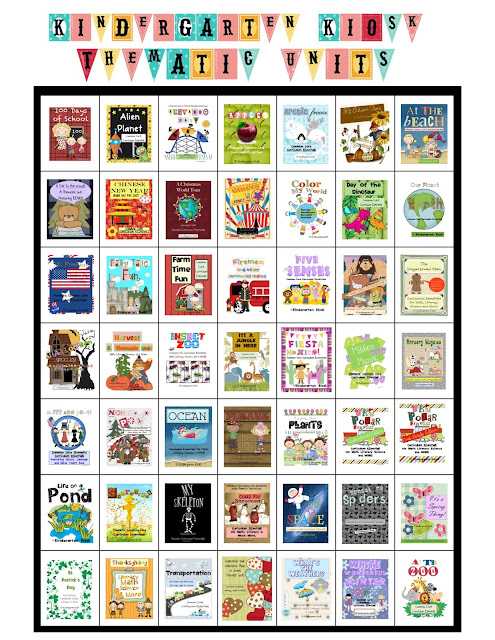
Kindergarten Common Core Thematic Units

As a beginning teacher my first professional development I attended was given by “Susan Kovalik & Associates” on Integrated Thematic Instruction. I was excited about the training and the idea of choosing a year-long-theme. Choosing a theme and plugging everything else into it seemed like a logical way to make sense of instruction; not only for myself but my students.
I quickly chose the theme “A Great Adventure in K” and began to plan my thematic teaching. Now, 20 years later I am so glad for my foundational roots planted deep in the tenants of early childhood and brain research. I am also very happy for my very first professional development arranged by a great principal, Jylene Morgan. I am very glad that I jumped in head first and went the route of thematic teaching! I would recommend to everyone to 1) Choose a year-long-theme and 2) Teach Thematically!
Before choosing a theme and plannning thematically, it is important to ask yourself, “Why?" What is your main motivation for thematic teaching? Is it to help children make links across different curriculum areas--to make learning authentic? If so..continue on!.
Following are the themes that we have developed and actually taught in our Preschool, Kindergarten, and 1st grade classrooms! We have found these themes to be exciting and engaging. Although all of the units are written specifically for kindergarten (with the exception of the 1st grade Polar Express Unit), they can be easily adapted for PreK and 1st. 

We have also sold these units to many homeschool parents. If you use these units throughout your child's homeschool PreK-1st experience, you will find everything you need to have a quality experience.


Welcome to Kindergarten Homework Packets: English and Spanish Versions

It is Back to School Time!

Start the year by establishing a fun and educational homework routine. Each month send home a monthly homework packet filled with active learning activities and games that are strategically liked to the Common Core Standards. These developmentally appropriate homework packets will leave your students and parents begging for more!

We offer 15 Kindergarten packets (includes intervention and Spanish versions) and 12 Preschool and First Grade Packets.
They will work for the described grade-level, but can also be use to differentiate the homework to match your child's current academic level.


Alphabet Lessons: Strategically Linked to the Common Core

These developmentally appropriate alphabet 

lessons are designed to teach early learners 

confidence with the alphabet.


The activities are based on reading research and national standards; they have been classroom tested by thousands of four, five and six year olds! The objectives, rationale, and/or language objectives are clearly stated for your added confidence. The material section is clear and concise to make lesson preparation a breeze! Remember to file all of the materials together in a file folder to make the preparation even easier the next time the lesson is delivered!

1. Building Letters
Objective: Students explore letter formation and analyze the similar features that letters share.
2. Write The School
Objective: Finding Alphabet letters in a familiar environment.
3. Bus Stop
Objective: Recognizing letters of the alphabet.
4. Letter Match
Objective: Matching uppercase letters.
5. Alphabet Relay
Objective: Naming uppercase letters at a fast pace.
6. Letter Treasure
Objective: Building toward automaticity of uppercase letters by playing an active game.
7. Don't Eat Pete!
Objective: Naming alphabet letters at a fast pace.

Assessing Common Core Standards: Kindergarten, Preschool


Assessing Young Children is one of the most important components of instruction. It is a means of determining what is occurring as individual students perform academic tasks. Assessments help teachers examine the strengths and weaknesses of developing minds and can pinpoint specific problems and highlight skills previously mastered. Ideally, the information and data gathered during assessments will guide and direct instruction, which in turn will lead to improved academic performance.

Kindergarten Kiosk has five great assessment options for Preschool and Kindergarten children. These assessments are well organized and very easy to use. Here is a small sampling of what purchasers are saying about these products.
“All I can say is thank you. So much time saved. This will be a plus for new and veteran teachers.” “Great!” Our whole grade level team is using this.” “Terrific!”  “Love it!”  “Love these!” “Great resource.” “Thank you for this wonderful creation!”

Check them out today. Be confident that you are preparing students for the rigors of the Common Core Standards.


Prepare Students for The Kindergarten Year


Strategically assess Kindergarten Language Arts


This is not specifically linked to the Common Core. Rather, it is the basic reading foundational skills necessary for all beginning readers

Teaching: All About Love

Isn't this note adorable? Aside from the obvious assessment point that I should have focused more on question marks, this message says it all.


One thing I know from my years of teaching is that you cannot be effective without first loving your students. So, as I am preparing for the new year, I am trying hard to focus on what really matters. Yes, there are a million fabulous ideas on Pinterest that will make all of our classrooms adorable, and who doesn't want that? But what really makes the difference is not classroom decor, but loving our students and empowering them to be the best they can be.

Two things that I do in my classroom to foster the love I have for my students is my Star of the Week program, and My Student Portfolio System. My students love them, and I love that my students love them.

Teacher Pick-Me-Up Idea

Ok, so I will immediately give credit to my husband for this idea. Twenty years ago when I began teaching he told me to keep every thank you card that I was ever given by a parent, student, colleague, administrator, etc. and place them in a box. Then, when I was having one of those hard teacher days, simply pull out the notes and read a few. So, that is just what I have done.

I have spent this week finally putting them in a scrapbook binder, organized in a state they deserve. What treasures! Here is a picture of some of the sheets ready to go into the book, and of course my class photos.


If you are not doing this, start right now! You will love the results.


Alphabet and Vowel Chunk Posters


Use these posters at your guided reading and writing centers to quickly give students assistance with alphabet sounds, and vowel chunks!


*Choice of colored or white backgrounds are included for your convenience.

Alphabet
Long A
Long E
Long I
Long O
Long U
AEIOU
Digraphs
Blends
R Controlled
Digraph and Diphthongs


Book Bag Buddies Build Excitement For Reading!


Your students will love having classroom book bag buddies! I have had buddies in my classroom now for 20 years and they are always a hit! Here are my current 25 buddies packed and ready for their turn. For easy management I have found it best to get them ready all at the same time, but as you build the program, simply prepare them as needed.


I generally send home two pets at a time. One for the helper and one for the caboose. You can organize it however you wish, and send home one or two at a time. I have found two to be the perfect number for me.

To start, simply find a book you love and then find a pet to match. You can usually find a pet at a thrift store, a garage sale, on amazon, or department stores (such a Kohls). I will also add an informational or nonfiction companion book if the story lends itself that way. For example if the story is Brown Bear I will include a real book about bears.

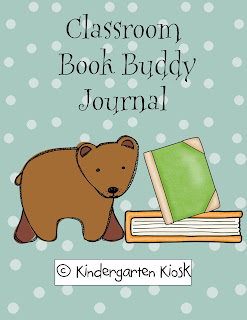
Next, make a journal! Copy the cover (add a picture that matches your pet), and then copy the inside front and back so that it will open from the top showing the next page when the page is lifted. 

Now, gather a vinyl backpack. Once again these can be found in all of the places listed above. Place the pet, the book(s), the journal inside of the backpack and it is ready to send home with the first student. 

Remember to introduce your class to the pet, set your rules with the pet, and build the excitement!

Get your journal free at our online story. Simply click the picture below!


Practice Handwriting Using a Catchy Tune

Review or introduce important vowel sounds using this catchy song sang to the familiar tune "The Wheels on The Bus!" And as you do, practice handwriting formation of vowels using these inviting workbook pages. Use individually or staple on the left to make a small "The Vowels on the Bus" workbook using the blackline cover provided.

*UPDATE: As requested, all consonants are now included for flexibility in use of this great practice in handwriting and letter sounds! 


Kindergarten Monthly Homework Packets


Check out our complete set of Kindergarten Homework Packets. You may purchase each separately for $4.00. But, we have packaged all 18 Kindergarten packets together for a $15.00 savings, $45.00. Below are the monthly packet contents and links to the individual previews. 

January Homework Contents
Table of Contents:
The Snowman A guided reading book
Snowy Lotto An alphabet game
Winter Delivery A sight word activity
Color Match Snowmen A color word activity
A Winter Wonderland A blending game
Snowflake Swirl A Counting activity
Snowman Clock A math activity
January Calendar A number handwriting activity

February Homework Contents
Table of Contents:
Little Valentines A guided reading book
Heart Bingo & Flash Hearts Sight word activities
Don’t Break My Heart A word segmenting game
My Valentines Using valentines to extend learning
Dragon Dance Alphabet Sound Fluency
Number Games Math Activities
February Calendar A number handwriting activity

March Homework Contents
Table of Contents:
Out in Space A guided reading book
Mr. Spaceman Conventions of Print
Letter Blast Off Alphabet Letter Sound Naming Automaticity
Race Through Space Alphabet Letter Naming Automaticity
Skip Counting Counting by 2’s, 5’s, and 10’s
Alien Planet Segment Words into Individual Phonemes
Decode it-Defeat it Reading CVC Words
Alien Snap Counting From any Given Number

April Homework Contents
Table of Contents:
The Pond A guided reading book
Slithering Snakes Alphabet sound fluency
Frogger A decoding game
Turtle Lotto A sight word game
Family of Ducks Word families
April Calendar A number handwriting activity
Frog Eggs Composing numbers
Easter Egg Delivers Plus and minus

May Homework Contents
Table of Contents
The Jungle A decodable, sightword reader
Roar! A decoding game
Safari Sights A sight word game
The Jungle A writing activity
Around the Zoo A comprehension activity
At the Zoo An addition game
Gorillas in Cages A subtraction game

June Homework Contents
Table of Contents
Capture the Butterfly A word family game
Mosquito Slap A sightword game
Flower Garden A sentence game
I Can be a Scientist A sightword reader
Lilypad Leap A number line game
Ladybug Addition An addition activity
Dragonfly Subtraction A subtraction activity
Across the Curriculum A collection of fun learning activities

July Homework Contents
Table of Contents
The Beach A sightword reader
Sand Castles A sightword game
Summer Celebrations A sentence game
Diving for Letters Alphabet recognition game
Shell Addition An addition game
Beach Ball Subtraction A subtraction activity
The Number Swim Writing Numbers


August Homework Contents
Table of Contents
Rhyme Book A book of rhymes
My ABC’s An ABC activity
Ride to the Park A color recognition game
The Shape of Things A shape recognition game
Number Flashcards A number recognition activity
Name Writing A handwriting activity
All about ME A classroom community building activity

September Homework Contents
Table of Contents
The Game Sightword reader
Football Flashcards A capital letter review
Kick off ABC Game An alphabet game
Name Cheer A letter recognition activity
Football Rhymes A rhyming game
The Team A number game
Huddle Up A number activity

October Homework Contents (Also includes non-holiday options)
Table of Contents
Haunted House A syllable game
Boo to You An alphabet game
Spider Race An alphabet activity
Monster Cookies Beginning sound activity
Dark Woods Math A number game
No Tricks, Just Treats A sort and graph activity

November Homework Contents
Table of Contents
My Bear A sightword reader
Time to Hibernate An alphabet game
Star Gazing A letter sound game
A Walk in the Woods An ending sounds game
Letter Trace A handwriting activity
Bear Math Various math activities
Number Bears A flashcard activity

December Homework Contents
Table of Contents
Christmas Time A sightword reader
Christmas Tree ABC An alphabet game
To the North Pole A rhyming game
Christmas Sounds A phonemic isolation game
Sound Train Alphabet Sound Fluency
Christmas Memory A number game
Letter Cookies A handwriting activity

Fall Intervention Homework Contents (Spanish Version also included)
Table of Contents
I like Books A guided reader
Alphabet Flashcards An alphabet activity
Capital Shake An alphabet game
My Letters A letter fluency activity
Beginning Sound Isolation Beginning sound game
A-Z Handwriting Handwriting
Number Practice A math activity

Winter Intervention Homework Contents (Spanish Version also included)
Table of Contents
Planes An alphabet sound game
Letter/Sound Fluency Practice sheets
Matching Middles A phonemic awareness activity
Find the Picture A blending and segmenting game
Handwriting Handwriting Practice
Sight Word Study A sight word activity
Color the Shape A math activity
Bingo 0-20 number recognition.

Spring Intervention Homework Contents (Spanish Version also included)
Table of Contents
The Early Bird An Alphabet Fluency Game
The Hungry Lamb Sound Fluency
Rain Go Away A decoding game
Flower Garden A sightword activity
Bunny Hop A segmenting game
Word Riddles Phonemic awareness
Number Hunt Number recognition
Baby Lambs Addition

We also sell preschool and 1st grade packets.


Thematic Units and Storage

Yes, I do all of the thematic units that are for sale at our on-line stores. And yes I do need lots of storage. But, look what my husband just built me in my garage! Thank you to the best husband that could ever be!

And the winner is...


Hannah Welch has been drawn as the winner of a complete set of homework packets of her choice! Please let us know your choice (PreK, Kindergarten, or 1st grade) and the set will be emailed off to you!


Five Senses: Thematic Common Core Unit


This thematic unit, “Five Senses,” offers cross-curricular support with strategic activities in language arts, music, math, science, writing and art while studying a familiar scientific concept. All math and language arts activities are strategically linked to the common core standards.

Activities include: 


Songs/Fingerplays
 Good Day
Five Senses

Guided Reading Books

Little Bear’s Five Senses
My Five Senses

Science

Name That Sound: Using Hearing to Make Observations
It Feels Like: Using Touch to Make Observations
Taste Test: Using Taste to Make Observations
How Does it Smell: Using Smell to Make Observations
I Spy With My Little Eye: Using Sight to Make Observations
Pop Pop Pop: Engaging the 5 Senses

Writing
Word Wall: Five Senses Six Poster Cards
Writing Prompts: My Five Senses
Label It: Label the 5 Senses


Art Projects
My Five Senses:Portfolio Page
Five Senses: Coloring Page

Scripted Math Lessons:

Sorting Senses: Representing Numbers in Different Ways
Graph It: Graphing Categories
Tactile Number Hunt: Matching Quantity to Numbers (Using the Sense of Touch)
Math Workpage
Five Senses: Sorting Data


Scripted Literacy Lessons:

Feel the Alphabet: Identifying Letters of the Alphabet
Touch and Seek Letters: Using Touch and Sight to Match Alphabet Letters
Nursery Rhyme Time: Listening to Nursery Rhymes to Identify Rhyming Words


Printfriendly